
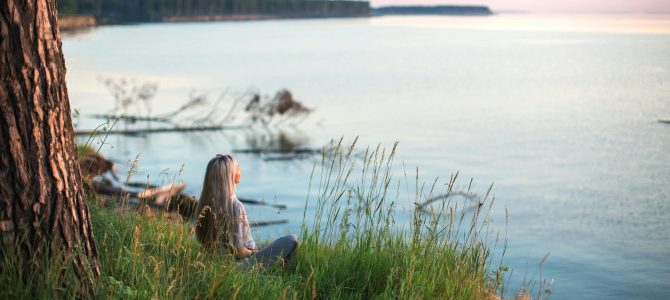
April is Earth Month, and while many people focus on what we can do for the planet, it’s also a good time to remember what nature does for us, specifically when it comes to mental health. We’ve all heard that spending time in nature is good for us, but how does it specifically help us and what can we do to maximize its benefits?
Benefits of Spending Time in Nature
With busy lives and schedules, people’s “outside time” is often limited to running errands, getting from one place to another, or taking out the trash. But just being outside doesn’t provide the same benefits as intentionally spending time with and in nature.
What is “nature”? No matter where you live or what kind of environment you live in, nature is always present. Even in major cities, there are parks, birds flying by, insects crawling around, and street trees. If you haven’t noticed the nature around you, here’s a reminder that nature is everywhere – you just have to look for it.
Growing research shows there are many benefits of spending time in nature including boosting your immune system, improving cognitive functioning, reducing stress and anxiety, improving sleep, decreasing cardiovascular disease, and enhancing overall mental health.
In this blog post, I will talk about how spending time in nature and practicing mindfulness can help you find emotional stability and inner peace.
How to Practice Mindfulness in Nature
Disconnect from technology. When trying to connect with nature, don’t do it through technology. See what it’s like putting your phone away and just listening and being present using your senses. Don’t take photos or use an app to figure out what kind of bird or plant you see. Just be present in the moment.
Make time for nature. Don’t just wait for outside time to happen. It’s important to make the time to go outside and fit it into your schedule. Put the effort in, whether it’s 5 minutes a day where you live, an hour a week at a nearby park, beach, or forest, or a weekend camping trip. If you’re thinking, “I don’t have time for that!” remember the responsibilities of everyday life can be put aside for 5 minutes. Spending time in nature can actually lead to greater productivity. Getting mental clarity from practicing mindfulness in nature can help you focus and feel more empowered, giving you the ability to stabilize and regulate your mood so you can be more productive when you are back to work, school, or life.
Think of dog-walking time as time for yourself. People who have dogs and walk them tend to spend more time in nature, but like I said before, it’s not just about the time outside, but what you are doing when you are outside. Are you noticing your surroundings? Are you being mindful about what you observe and how you feel? Don’t think of dog walking as a chore or something you have to do. Think of it as your time to bond with your dog, connect with nature, and deepen your relationship with self.
Tap into your senses. Observe the colors you see, what you can smell, and how you feel. Feel the sun and breeze on your skin. Go outside and look at a tree. What color is the bark? Is the bark smooth or rough? What color and shape are the leaves? How do the leaves move when the wind hits them? Do you see any insects crawling on the tree? Are there any bird’s nests in the tree? Notice what it really feels like to disconnect from technology and the stress of everyday life. This is practicing mindfulness in nature.
Be OK with solitude. When you are alone, it’s time you can focus solely on yourself. Get away from the hustle and bustle of technology, the drama of personal life, and the stressors of news and current events. Spending time in nature gives you the opportunity to quiet your mind and connect with yourself in a deeper way.
Practice gratitude. When you are in nature, notice interactions between animals, plants, and the environment. Let it fill you up with gratitude that there’s life and positivity around us. Align yourself with that positivity instead of getting bogged down with challenges and negativity of life. No matter what happens, nature is always there for us.
Incorporate grounding techniques. Go outside and find a calm place where you can be alone for a moment. Before you start, take note of how you feel mentally, emotionally, and physically without judgment. It’s ok to be exactly how you are. What you may be feeling are all natural responses to what is going on around you and in your life.
Focus on your breath. Tap into your 5 senses to ground yourself and find stability:
What are 5 things you see around you?
What are 4 things you can touch near you?
What are 3 things you can hear?
What are 2 things you can smell?
What is 1 thing you can taste?
Now notice how you feel. What happened? Do you feel any different?
Improve Your Overall Wellbeing
The more you spend time in nature, the more you’ll be able to regulate your emotions and be empowered in other parts of your life. It gives you a chance to have a real moment of peace and get away from the stressors of everyday life. Nature brings solitude, gratitude, and peace within you that’s difficult to get in touch with in our busy lives. Connecting with nature is like breathwork – it’s permanent and always there as long as you’re living. It’s free and accessible – you just have to create the time and set the intention to do it.
If you are feeling overwhelmed, stressed, and finding it difficult to focus and prioritize your mental health, therapy can help empower you so you can find the time and connect with nature to improve your overall wellness. Dr. Heather Violante provides teletherapy (online video therapy) to adults living in Florida and New York, as well as all PsyPact enrolled states. Contact her online or call (754) 333-1484 to request a HIPAA compliant online therapy session.
Offering Online Therapy Across the Country
I am a licensed psychologist in the states of Florida and New York. Additionally, I have Authority to Practice Interjurisdictional Telepsychology (APIT) from the PSYPACT Commission. I provide telehealth (online video therapy) to adults living in participating PSYPACT states. For a list of current PSYPACT participating states, please visit the PSYPACT website at: https://www.psypact.org/psypactmap.